🎧 Sound Design Portfolio
Two game sound-design projects — full design documents with the original visuals.
Gris
Role: Sound design · Sound synthesis · Composition · Music editing
Software: Ableton Live, Pro Tools
Game & chapter overview
Gris is a platform-adventure game. It follows a girl named Gris who wakes before a crumbling statue of a woman. She tries to sing but soon chokes up; the statue's hand falls apart, dropping her to the colorless land below. After landing, she keeps moving forward, meeting strange structures that seem to be powered by mysterious, star-like points of light. She can collect these lights to gain new abilities — such as turning into stone, or creating new constellation-like paths.
Opening cinematic — style design
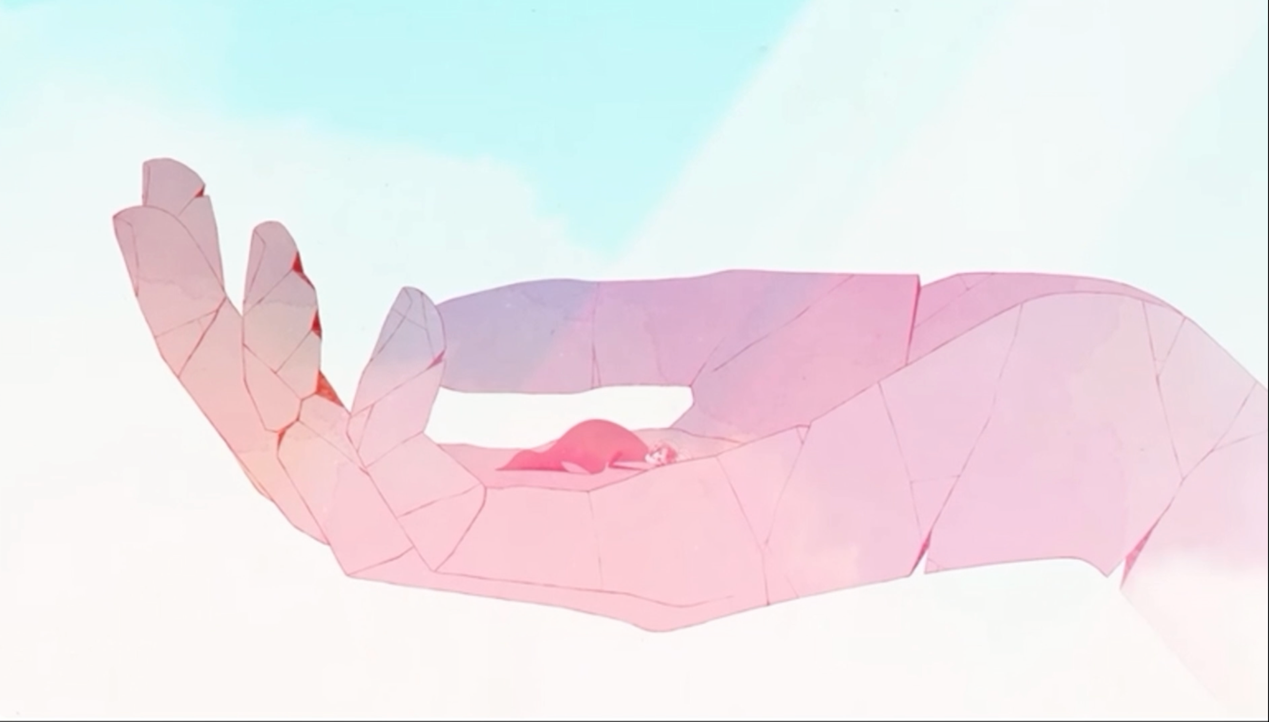
The opening cinematic uses a synth-piano timbre from Live. This timbre gives a sense of memory, drawing the listener into the world that follows. Compositionally it uses continuous, slightly irregular rhythms with a highly repetitive melody — light and dreamlike, tinged with a touch of melancholy.
Chapter 2 — Anger
The second chapter, Anger, is one of the emotional climaxes of the story. Tempered by repeated sandstorms, the girl gradually grows stronger and bravely faces the challenges ahead.
Visual style analysis: The visuals are dreamy and beautiful, with fairly soft colors. Chapter 2's main tone is red, adding an atmosphere of struggle and tension. Most of the time the camera sits far from the scene. The most striking shift comes as the sandstorm arrives: red smoke-clouds engulf the whole scene and visibility drops rapidly.
Sound style design: The overall design holds to a "simple but not simplistic" style — it must neither break the quiet, harmonious atmosphere nor lack detail and feel crude. This remake carries more contrast than the original. In everyday traversal the style is gentler and more dreamlike, while at moments of growth — the sandstorm, or obtaining the "box" ability — it becomes more deeply affecting.
(1) Footsteps: Must suit different materials. Loudness fairly low, mid and high frequencies attenuated, reverb and delay added as appropriate to match the open, distant visuals. Indoor and outdoor handling differ — indoor footsteps slightly more prominent.
(2) Ambience: Subtle point sources woven in, such as the fine friction of sand or tiny rock/metal drops (depending on the environment). In the temple, low frequencies are moderately boosted, and point sources shift accordingly — for example bell sounds that move continuously with the player's position.
(3) Effects: Mainly synthesis-based. Because effect sounds are often tied to "achievement," they need a clear sense of positive feedback, with chorus added to create a feeling of holiness.
* Sandstorm: A clear "negative-feedback" effect, mainly synthesis-based, richly layered — randomly synthesized notes (mimicking the texture of sand) and extremely low-frequency wind. A whisper element is inserted, like the low murmur of a demon.
Keywords: brave, vast, contrast, quiet, dreamlike, beautiful, sacred.
Depression (Chapter 4)
Depression is the fourth chapter of Gris. Its theme color is blue, symbolizing the saddest stage. In the first half the player collects stars; after gathering six, they place them into a shell — which is actually a sea turtle, now revived. The turtle dives into the dim abyss, and the light it emits becomes a guide for the player to follow. The player then falls into the plight of being chased by an eel; after the chase they quickly ascend and swim away, and are finally rescued by the turtle, swimming toward a new area — a storyline that pushes the emotion to its climax.
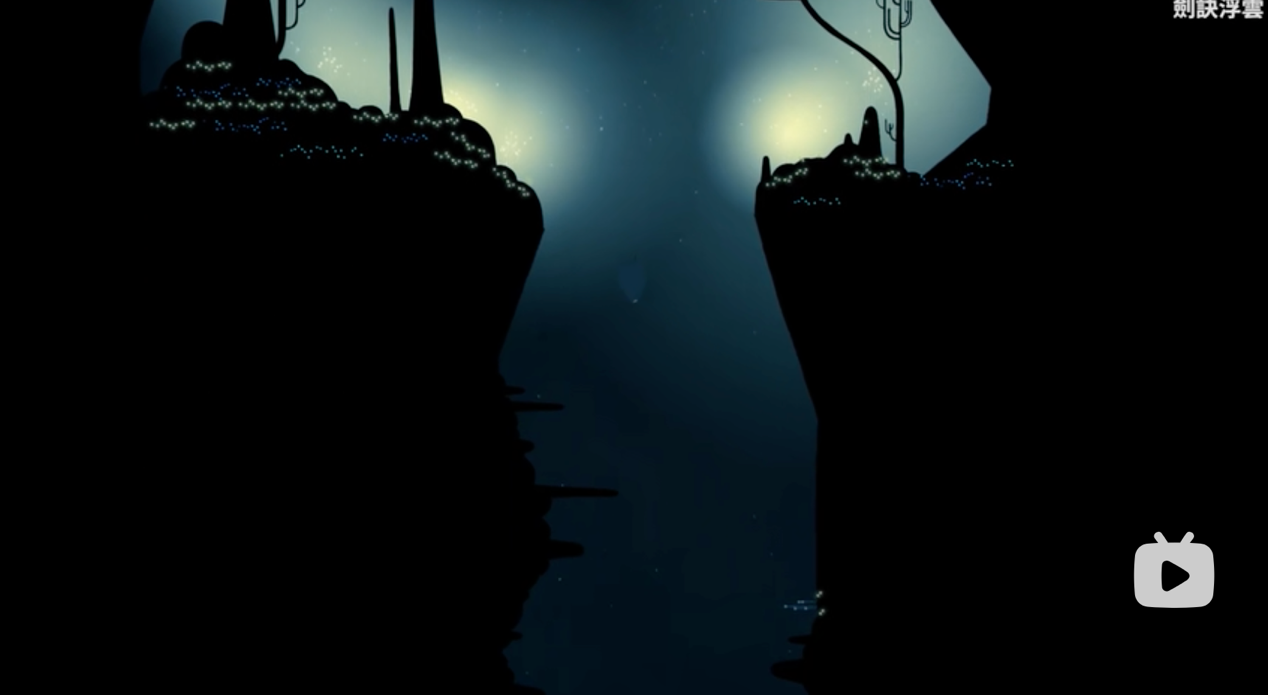
Visual style analysis: The overall palette is dark, and brightness varies markedly with water depth. Faint light sources dot the scene, like starlight. When rescued by the turtle, the palette turns dreamlike, and the scene shifts to an open area full of glowing jellyfish.
Sound style design: This section draws on ambient-music composition, using synthesizers to build multiple atmospheric layers. As the visual colors shift between light and dark, the number of layers rises or falls, giving a distinctly varied experience. The darker the scene, the more low frequency, and the more pronounced the dissonant, conflicting, ominous atmosphere; effects and timbres lean unreal and surreal.
The lighting's sound design is gentler, like twinkling starlight, forming a clear contrast with the background. The turtle's appearance is where emotion erupts — but not too violently; instead the sound's mass gently expands, giving a feeling of "sudden clarity." Jellyfish and bubbles have a wide sound field with delay processing, and major-key chords with an orchestral-like timbre add drama and grandeur.
For the eel, the focus is the "bite" — the very source of conflict in the story. The eel is moderate in size but still threatening, sitting in a vast body of water, so its sound is given large reverb with appropriately boosted low frequencies.